
1. Architectural Lighting: Highlighting Modern Design
Exterior architectural lighting enhances the character of a building while emphasizing its structure, materials, and design details.
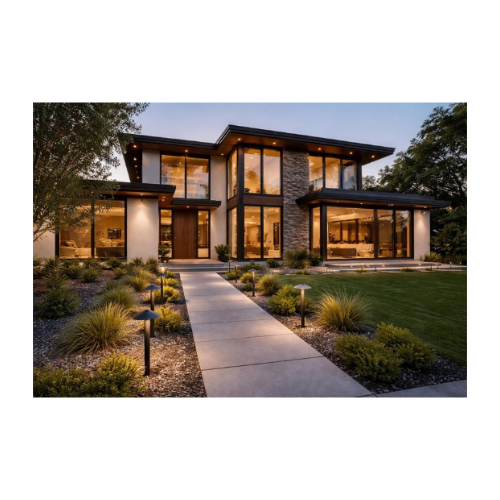
In this residence, recessed LED downlights installed beneath the roof overhangs provide subtle, evenly distributed illumination. These fixtures highlight the building’s horizontal lines, illuminate exterior entrances, and create a welcoming atmosphere after sunset.
Carefully positioned architectural lighting can also emphasize stone surfaces, exterior walls, and distinctive structural features without overwhelming the overall design.
2. Interior Lighting: Comfort, Warmth, and Functionality
The interior lighting visible through the expansive glass windows demonstrates how illumination contributes to the atmosphere of a modern home.
Warm interior lighting creates a comfortable and inviting environment while enhancing the visual connection between indoor living areas and the surrounding landscape.
A well-planned interior lighting scheme can incorporate recessed ceiling downlights, ambient illumination, and accent lighting to provide flexibility for different activities and spaces.
Combining different lighting layers helps achieve both practical illumination and a refined residential atmosphere.
3. Landscape Lighting: Enhancing Outdoor Spaces
Landscape lighting adds depth, dimension, and functionality to outdoor environments.
In this design, pathway lights are strategically positioned along the walkway to provide gentle illumination while highlighting the surrounding garden and landscaping.
Low-level outdoor fixtures help define walking paths, improve nighttime visibility, and create an attractive transition between the entrance and the surrounding outdoor areas.
Landscape lighting can also be used to highlight trees, plants, garden features, and architectural elements, bringing outdoor spaces to life after dark.
4. The Importance of Coordinated Lighting
The most successful lighting designs consider the entire property rather than treating indoor, architectural, and landscape lighting as separate elements.
A coordinated approach helps achieve:
- Visual Continuity: Connecting indoor and outdoor environments through consistent lighting design.
- Architectural Enhancement: Highlighting building materials, structural features, and exterior details.
- Functional Illumination: Providing appropriate lighting for entrances, walkways, and living areas.
- Atmosphere and Comfort: Creating welcoming spaces through carefully selected lighting and colour temperatures.
- Design Flexibility: Combining general, accent, and decorative lighting for different applications.
5. Choosing the Right LED Lighting Solutions
Selecting suitable lighting fixtures is essential for achieving the desired result. Factors such as colour temperature, beam angle, lumen output, fixture placement, dimming compatibility, and environmental protection should be considered during the design process.
Modern LED technology provides versatile solutions for residential, commercial, and architectural applications, offering opportunities to combine attractive lighting design with energy-conscious performance.
For outdoor installations, selecting fixtures with appropriate weather resistance and protection ratings is particularly important for long-term reliability.
Discover Modern Lighting Solutions with Maxtar Lighting
Great lighting design transforms more than a building’s appearance. It creates comfortable interiors, enhances architectural details, and makes outdoor spaces more welcoming and functional.
At Maxtar Lighting, we are committed to providing innovative LED lighting solutions for a wide range of residential, commercial, and architectural applications.
Whether illuminating an interior space, highlighting a building’s exterior, or creating an inviting landscape, the right lighting makes all the difference.
Maxtar Lighting – Quality, Innovation, and Performance in Every Light.
Explore our lighting solutions at www.maxtarlighting.com.